
Chapter 34 of Laozi's Tao Te Ching explains the profound nature of the Tao, the source of all things. It describes how the Tao pervades everywhere, creating and nurturing all things, yet never asserts itself as master or boasts of its accomplishments. It paradoxically suggests that while the Tao may appear small and insignificant on the surface, it possesses an ultimate greatness that causes all things to eventually return to it. This chapter reveals the true greatness hidden within the Tao's non-action (無為) and humility.
📖 Table of Contents
- ✨ Introduction
- 📜 Original Text (原文)
- 📃 Meaning of the Original Text
- 🌲 Line-by-Line Translation
- 💧 Verse-by-Verse Commentary and Interpretation
- 大道泛兮 其可左右 (dà dào fàn xī, qí kě zuǒ yòu)
- 萬物恃之而生而不辭 (wàn wù shì zhī ér shēng ér bù cí)
- 功成不名有 衣養萬物而不為主 (gōng chéng bù míng yǒu, yī yǎng wàn wù ér bù wéi zhǔ)
- 常無欲 可名於小 (cháng wú yù, kě míng yú xiǎo)
- 萬物歸焉而不為主 可名於大 (wàn wù guī yān ér bù wéi zhǔ, kě míng yú dà)
- 以其終不自大 故能成其大 (yǐ qí zhōng bù zì dà, gù néng chéng qí dà)
- 🌳 Overall Interpretation
- 🌟 The Meaning and Importance of Chapter 34
📜 Original Text (原文)
大道泛兮 其可左右
萬物恃之而生而不辭
功成不名有 衣養萬物而不為主
常無欲 可名於小
萬物歸焉而不為主 可名於大
以其終不自大 故能成其大
📃 Meaning of the Original Text
The great Tao overflows, it can go to the left and to the right.
All things depend on it for life, and it does not refuse them.
It accomplishes its work, but does not claim possession. It clothes and nourishes all things, but does not act as their master.
Always without desire, it can be named among the small.
All things return to it, yet it does not act as their master, so it can be named among the great.
Because it never considers itself great, it is able to achieve its greatness.
🌲 Line-by-Line Translation
大道泛兮 其可左右 (dà dào fàn xī, qí kě zuǒ yòu)
The great Tao overflows; it can go to the left and to the right.
萬物恃之而生而不辭 (wàn wù shì zhī ér shēng ér bù cí)
All things depend on it for life, and it does not refuse them.
功成不名有 衣養萬物而不為主 (gōng chéng bù míng yǒu, yī yǎng wàn wù ér bù wéi zhǔ)
It accomplishes its work, but does not claim possession. It clothes and nourishes all things, but does not act as their master.
常無欲 可名於小 (cháng wú yù, kě míng yú xiǎo)
Always without desire, it can be named among the small.
萬物歸焉而不為主 可名於大 (wàn wù guī yān ér bù wéi zhǔ, kě míng yú dà)
All things return to it, yet it does not act as their master, so it can be named among the great.
以其終不自大 故能成其大 (yǐ qí zhōng bù zì dà, gù néng chéng qí dà)
Because it never considers itself great, it is able to achieve its greatness.
💧 Verse-by-Verse Commentary and Interpretation (逐句解說與解釋)
1. 大道泛兮 其可左右 (dà dào fàn xī, qí kě zuǒ yòu)
o Literal Meaning: The great Tao overflows; it can go left and right.
o Commentary: '大道' (dà dào) refers to the vast and complete state of the Tao, the fundamental principle of all things. In '泛兮' (fàn xī), '泛' (fàn) means to overflow like water, to pervade, or to float, while '兮' (xī) is a grammatical particle. It is a metaphor for how the Tao is present everywhere without exception. '其可左右' (qí kě zuǒ yòu) means 'it (其, the Tao) can go (可) left (左) and right (右).' This indicates that the Tao's function is not limited to a specific direction or method but flows flexibly and works within all things.
o Interpretation: The Tao, the source of all things, exists everywhere like overflowing water, and its function is not bound by any direction or method, appearing flexibly within all things. This emphasizes the universality and flexibility of the Tao.
2. 萬物恃之而生而不辭 (wàn wù shì zhī ér shēng ér bù cí)
o Literal Meaning: All things depend on it for life, and it does not refuse them.
o Commentary: In '萬物恃之而生' (wàn wù shì zhī ér shēng), '萬物' (wàn wù) means all beings in the world. '恃之而生' (shì zhī ér shēng) means 'they depend on (恃) it (之, the Tao) to be born (生).' This shows that all things exist with the Tao as their source. '而不辭' (ér bù cí) means 'but (而) does not refuse/decline/artificially intervene (不辭).'
o Interpretation: All things in the world are born from and exist because of the Tao, yet the Tao does not demand anything in return for creating and nurturing them. It does not favor certain beings over others, nor does it try to intervene artificially in the process, instead allowing things to be as they are naturally. This demonstrates the selfless and non-interfering creative action of the Tao.
3. 功成不名有 衣養萬物而不為主 (gōng chéng bù míng yǒu, yī yǎng wàn wù ér bù wéi zhǔ)
o Literal Meaning: It accomplishes its work, but does not claim possession. It clothes and nourishes all things, but does not act as their master.
o Commentary: In '功成不名有' (gōng chéng bù míng yǒu), '功成' (gōng chéng) means the work is done, all things are created/completed. '不名有' (bù míng yǒu) means 'does not (不) name (名) it as its possession (有).' The Tao completes all things but does not claim ownership of the results. In '衣養萬物而不為主' (yī yǎng wàn wù ér bù wéi zhǔ), '衣養萬物' (yī yǎng wàn wù) means 'it clothes and nourishes (衣養) all things (萬物),' a metaphor for the Tao's nurturing function. '而不為主' (ér bù wéi zhǔ) means 'but (而) does not become (不為) their master (主).' The Tao nurtures all things but does not claim to be their master.
o Interpretation: The Tao plays the great role of creating and completing all things, but it does not claim ownership of the results or boast of its accomplishments. It nurtures and sustains all things, but it does not try to dominate them as their master. This emphasizes the core attributes of *wu wei* (無為): non-possession (不有), non-assertion (不名有), and non-domination (不為主).
4. 常無欲 可名於小 (cháng wú yù, kě míng yú xiǎo)
o Literal Meaning: Always without desire, it can be named among the small.
o Commentary: '常無欲' (cháng wú yù) means 'always (常) without desire (無欲).' The Tao has no artificial desires or intentions. '可名於小' (kě míng yú xiǎo) means 'it can be (可) named among (名於) the small (小).' Because the Tao is desireless, it does not reveal itself and is humble, so it appears small and insignificant on the surface.
o Interpretation: The Tao simply is what it is, without artificial desires or intentions. Therefore, it does not manifest itself or display its power, so to the people of the world, it may seem small and trivial. This shows how the non-assertive and humble nature of the Tao manifests as external 'smallness.'
5. 萬物歸焉而不為主 可名於大 (wàn wù guī yān ér bù wéi zhǔ, kě míng yú dà)
o Literal Meaning: All things return to it, yet it does not act as their master, so it can be named among the great.
o Commentary: '萬物歸焉' (wàn wù guī yān) means 'all things (萬物) return to (歸) it (焉, the Tao).' This signifies the natural cycle where all things, after their life activities, return to their source, the Tao. '而不為主' (ér bù wéi zhǔ) is the same as in the previous line; the Tao does not become their master even when all things return to it. '可名於大' (kě míng yú dà) means 'it can be (可) named among (名於) the great (大).'
o Interpretation: Ultimately, all things return to the Tao and find rest within it. The Tao serves as the final destination and fundamental ground for all things, yet it does not become their master or seek to dominate them. Because of this vastness and its capacity to embrace all things, the Tao deserves to be called 'great' (大).
6. 以其終不自大 故能成其大 (yǐ qí zhōng bù zì dà, gù néng chéng qí dà)
o Literal Meaning: Because it never considers itself great, it is able to achieve its greatness.
o Commentary: In '以其終不自大' (yǐ qí zhōng bù zì dà), '其' (qí) is the Tao. '終不自大' (zhōng bù zì dà) means 'in the end, it never (不) considers itself (自) great (大) or boasts.' The Tao does not claim or boast about its own greatness. '故能成其大' (gù néng chéng qí dà) means 'therefore (故) it is able (能) to achieve (成) its (其) greatness (大).'
o Interpretation: The Tao may seem small and trivial on the surface (可名於小), and it does not assert its own greatness by publicizing its grand achievements or its role as the destination for all things (終不自大). The conclusion is that precisely because of this humility and non-assertion, the Tao is paradoxically able to become the source of all things and achieve true 'greatness' that embraces everything ('成其大'). This is a core paradox of Taoist thought: one attains true greatness by lowering oneself.
The thirty-fourth chapter speaks of how the Tao, the source of all things, exists and acts in the world.
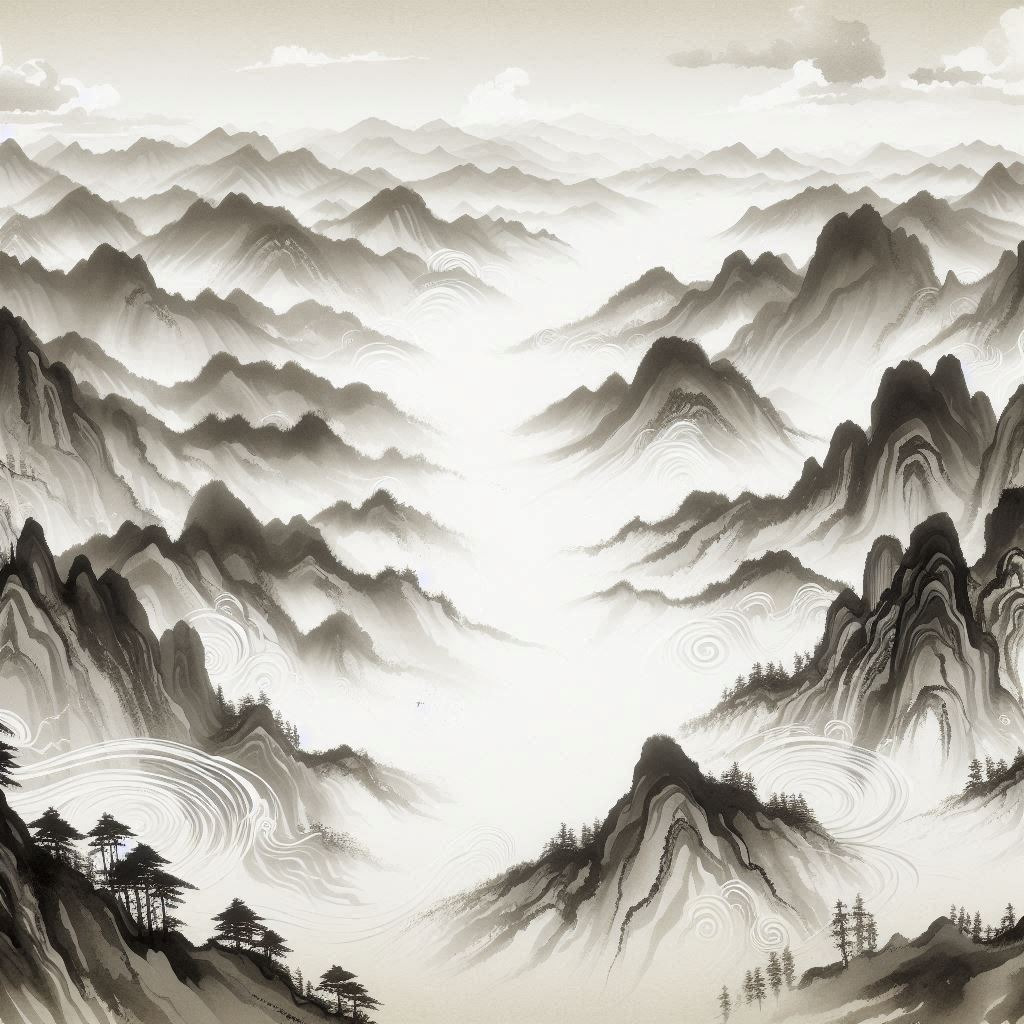
The 'great Tao,' the source of all things, pervades everywhere like overflowing water, and its function is not bound by any direction or method, flowing flexibly to the left and to the right.
All things in the world are born from and exist because of this Tao, yet the Tao does not demand anything in return for creating and nurturing them. It does not favor certain beings over others, nor does it try to intervene artificially in the process, instead allowing things to be naturally.
The Tao plays the great role of creating and completing all things, but it does not claim to be the 'master' of the results or boast of its accomplishments. It nurtures and sustains all things, but it does not try to dominate them as their master.
Because the Tao simply is what it is, without artificial desires or intentions, it does not reveal itself or display its power, so to the people of the world, it may seem small and trivial. Thus, it can be named among the 'small.'
However, all things in the world ultimately return to the Tao and find rest within it. The Tao serves as the final destination and fundamental ground for all things, yet it does not become their master or seek to dominate them. Because of this vastness and its capacity to embrace all things, it can be named among the 'great.'
The Tao does not assert or boast of its own greatness, despite its grand accomplishments and its role as the source of all things. Precisely because of this humility and non-assertion, the Tao is paradoxically able to become the source of all things and achieve true 'greatness' ('成其大') that embraces everything.
🌟 The Meaning and Importance of Chapter 34
Chapter 34 presents the following core ideas:
- The Universality and Flexibility of the Tao: The Tao pervades everywhere (泛兮), and its function is not limited to any single direction but is flexible (可左右).
- Non-possession, Non-assertion, and Non-domination of the Tao: The Tao creates, nurtures, and completes all things, but it does not regard the results or the things themselves as its possessions (不名有), does not boast of its accomplishments (不名有), and does not seek to dominate as a master (不為主). This forms the core of the Tao's *wu wei* (無為).
- The Paradox of 'Small' and 'Great': The Tao, being without desire, may appear small on the surface (可名於小), but as the source and destination of all things, it is ultimately 'great' (大).
- 'Because it never considers itself great, it is able to achieve its greatness': This is a core paradox of Taoist thought, suggesting that the Tao's humility and non-assertion are precisely what allow it to achieve true greatness (大). This can be applied to human life and leadership, implying that true influence and accomplishment are gained by lowering oneself and not seeking the spotlight.
- A Guide for a Life Following the Tao: This chapter provides indirect guidance on how humans should live by describing the nature of the Tao. Through virtues such as humility, non-assertion, non-action, and non-possession, one can live a life closer to the Tao and achieve true greatness.
Chapter 34 is a crucial chapter that explains the concept of the Tao in the Tao Te Ching through profound yet concrete metaphors and paradoxes. By contrasting the vast action of the Tao with its humble nature, it powerfully conveys the core Taoist value that true greatness is achieved not through artificial assertion and showmanship, but through humility and the attitude of non-action (*wu wei*).


댓글